Search This Blog

Wednesday, September 15, 2010

The best lodges for Leopard viewing in South Africa

Where in South Africa should you go for the best Leopard viewing? Here's The Game Lodge Index list:
Top End Lodges that offer excellent leopard viewing:


Malaria Free leopard viewing
Leopard sightings in the malaria free areas are not as frequent or as up close as the lodges mentioned above. Yet there is still a strong chance of seeing leopard in:

Best Affordable Lodge to view Leopard?

Why not search The Game Lodge Index to find other Leopard viewing options?
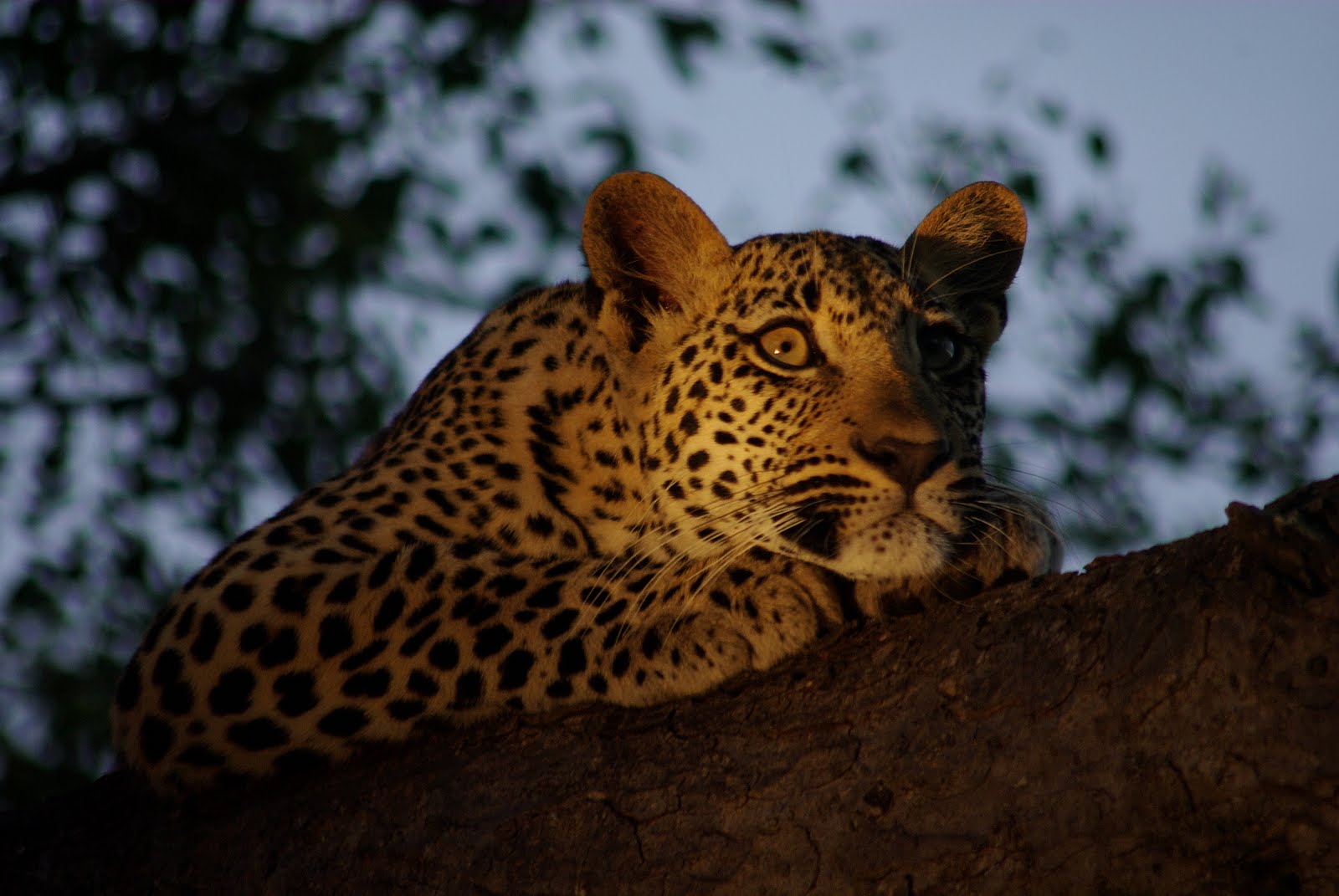
This is a very special leopard found in Madikwe Game Reserve and spotted while our review teams where staying at Tuningi Safari Lodge and Royal Madikwe

If you've been to Madikwe Game Reserve, please support their Leopard monitoring program here

Tuesday, September 14, 2010

Interesting facts about: Leopards

The leopard is Africa’s most efficient hunter with a 40% success rate

Adult male leopards reach 65cm (26 in.) tall at the shoulder and weigh up to 60 Kg (132 lb.). The female are predictably smaller, averaging 60 cm (24 in.) at the shoulder and weighing 55 Kg (121 lb.)

The leopard’s most distinctive feature is the black spots on its tan coat, which makes it able to camouflage itself extremely well, hence being known as the elusive cat.


Leopards are very successful as a species, and have adapted well to their ever diminishing natural habitats. They have even settled quite comfortably in the midst of agricultural communities, feeding off the very vulnerable livestock.

Dense bush in rocky surroundings and riverine forest are their favorite habitats, but leopards adapt to many places in both warm and cold climates.

Leopards are primarily nocturnal, usually resting during the daytime in trees or thick bush.

These cats are opportunistic hunters and will take smaller alternative prey such as baboons, monkeys and hares.

Leopards can also obtain all their water requirements from kills, and are therefore not dependent on water. They will however drink if water is available.

Leopards are the quintessential stalking predators, and the term “leopard crawling” is well founded. They prefer to hunt at night, and seek to crawl as close as possible to their chosen prey.

Although they are the second largest of the African predators their kills are often vulnerable and can be taken from them by lion, spotted hyena, wild dog and even jackal when they are in numbers.

The leopard, being the strongest cat weight for weight has the ability to drag a carcass high into trees. The carcasses could be its own weight or more, and the cat claws its way up a vertical tree trunk with the animal in its mouth.

Leopards growl and spit with a screaming roar of fury when angry and they purr when content. They announce their presence to other leopards with a rasping or sawing cough.

The elegant, powerfully built leopard has a long body, relatively short legs and a broad head. Its tawny coat is covered with dark, irregular circles called "rosettes."

Leopard marking in Kruger Park

Monday, September 13, 2010

Photo of the Week - Leopard


Leopard are rarely seen in the thickets of the Eastern Cape bush so it's with great excitement that Riaan and Julie tell of how they "spotted" one recently. You can read the entire sighting story on their blog. They run an lovely camp that is one of the most affordable luxury safaris in South Africa. The camp is called Quatermain's and you can find out more from the website. If you want to read what reviewer, Jaime, thought of his experience, follow the link to The Game Lodge Index 


You can also read the incredible story of how wild leopards are being spotted in the Betty's Bay area, in the Western Cape. 

Friday, September 10, 2010

What to do and Where to go this Weekend!

There are so many people doing so many good things out there that we decided to tell you about them. So while you're on the net this weekend, why not take some time to visit their sites and support their causes.

MISSION RHINO - Helping to preserve Rhinos in South Africa
In South Africa, we are fortunate to enjoy a huge diversity of native animals and birds but every year millions of these animals are killed, injured, or suffer some trauma – either as a result of direct contact with man, or the impact that we have on the environment. At Mission Rhino our aim is to help redress the balance between man and nature and to play our part in preserving our heritage for future generations to enjoy. While there are thousands of organizations and schemes dedicated to the vital work of preserving natural habitats, there are still very few who help rhino. Find out about the volunteering program too!


AFRICA GEOGRAPHIC - The magazine that brings the world to Africa 
and takes Africa to the world
The blog features up to the date news on safari related events across Africa. It's worth subscribing to their blog or download their information packed digimag - the online magazine. Subscribe and the links gets sent to your inbox and IT'S FREE!

PLAN YOUR SAFARI - A great blog for interesting reading!

Head over to Plan Your Safari and read interesting articles packed with safari related tips and insights. Featuring great photos, useful information and covering a large part of Africa, this is essential reading!

If you're stuck in city this weekend and can't get to the bush, plan your next trip by heading over to the Getaway Show, being held at the Coca-Cola Dome in Northgate.

If you're reading this on Friday, why not test your safari skills at Rhino Africa's "Friday Quiz"


last but not least - PHOTO AFRICA

Photo Africa is a website showing the incredible photos, offering photographic safaris and extremely useful tips for aspiring photographers. During September they're offering some amazing wallpaper images which will leave you dreaming of the Africa you wish you could see every day. 

Have a great weekend!

Thursday, September 9, 2010

Destination of the Week - Samara Private Game Reserve


Samara Karoo Lodge - Karoo Kaleidoscope

The Samara Karoo Lodge on the Samara Private Game Reserve is a luxurious camp styled around a traditional Karoo farmhouse with thick patios around the entire exterior offering guests the opportunity of relaxing on a private porch and soaking up the magic of the Karoo. There are 6 suites in total accommodating a maximum of 12 guests at a time - 3 Lodge Suites which form part of the main homestead and three Karoo Suites which are hugely spacious independent cottages. The décor is suitably simple and local in theme. Arriving back from a game drive to a freshly run and piping hot bubble bath soothes away any aches and pains. The lodge is quintessentially Karoo in character.


The Samara Game Reserve is something special. It covers a huge area of 28 000 hectares and hosts a wide array of habitat types. Game drives are conducted in a 14 000 hectare section of the property where rhino, buffalo and cheetah roam whilst nature walks and hiking can be done on the other 14 000 hectare which does not host any dangerous game. Although not a big 5 reserve, Samara is home to small populations of rhino, buffalo and leopard (rarely seen). The true beauty of Samara lies in the continually changing vistas. The lodges are situated in lower lying areas of typical Nama Karoo dominated by its usual succulent plant species, dry river beds and beautiful shepherd trees. As you head up the thickly vegetated valleys you emerge on to a plateau of vast open grasslands. The views from up here of the immense Karoo floor hundreds of metres below are absolutely breathtaking. Herds of black wildebeest, blesbok and eland roam the plains. Samara is home to healthy populations of Plains and Cape Mountain Zebra which both naturally occur here. A highlight of any trip to Samara is the late night safari where guests search for unusual nocturnal creatures such as aardvark, springhare and black footed cat. Another highlight is approaching wild cheetah on foot. The adult cheetahs on Samara are collared and guides use telemetry equipment to track the animal’s location on this vast reserve. Once sighted guests alight from the vehicle and follow the guide on foot to view these magnificent cats in the open.


Samara Karoo Lodge is suitable for families, couples and small groups looking for an intimate nature experience in the Karoo. Samara is especially suitable for nature lovers looking for something a bit different from your typical big game viewing safari – here the focus is on the smaller and often more interesting plants and creatures. Highlights are the possibility of getting up close and personal to cheetah on foot or to see elusive aardvark (Samara is arguably the best place in South Africa to view these creatures). The night drives in particular offer a very rewarding game viewing experience


SAMARA SPECIAL OFFER!!
Samara Private Game Reserve has so much to offer - we believe that you need three nights under the Karoo skies to truly experience the wonders of Samara, and that is why we will be giving you a complimentary third night as our gift to you for booking of 2 nights or more.


Begin the journey of revitalisation on your 'thinking mans safari', where you can plant a spekboom, walk with a master tracker and explore the ancient rock arts before relaxing to an afternoon of indulgence with spa treatments, Karoo cuisine and sunset game drives.


Elegant lodges provide luxury accommodation nestled between an amphitheatre of mountains on 70,000 acres, where wildlife roams again. An amazing life changing experience awaits, so come walk with the cheetah as you celebrate the rebirth of a unique piece of Africa and experience a luxury safari in the Graaff Reinet region of the Eastern Cape.


Contact Samara Reservations


Read more about our experience at Samara Private Game Reserve on The Game Lodge Index

Wednesday, September 8, 2010

The Last Cheetah – Nairobi National Park

The Last Cheetah – Nairobi National Park

The Last Cheetah

P1080559

Yesterday, in the Athi Basin, we came across what I believe to be the last cheetah in Nairobi National Park: a large male.

He had killed a hen ostrich & on our approach, trotted off (an extremely wary cheetah, this: he would have to be , would he not, to be the last survivor?

P1080563

Paradoxically there are many (8?) cheetahs in the ‘Orphanage’ at Main Gate & across the main highway to Tanzania (which is the southern, uncrossable, boundary of the park’s dispersal area) there seems to be a fair population of wild cheetahs, but this is the last one in NNP: no cubs have been seen for several years now, though we hope that by some miracle a female may appear from somewhere……

P1080565

Look at the belly:stuffed with ostrich meat!

P1080567

The kill: a cheetah pulling down & killing an ostrich is something I have never heard of!

P1060379

But then this is no ordinary cheetah: here’s a shot from several years ago of the same cheetah on a fully grown kongoni he killed: this individual is a formidable hunter……

Bookmark and Share